
Writing Exercises #6
On citizenship tests, gratitude, and tattoos

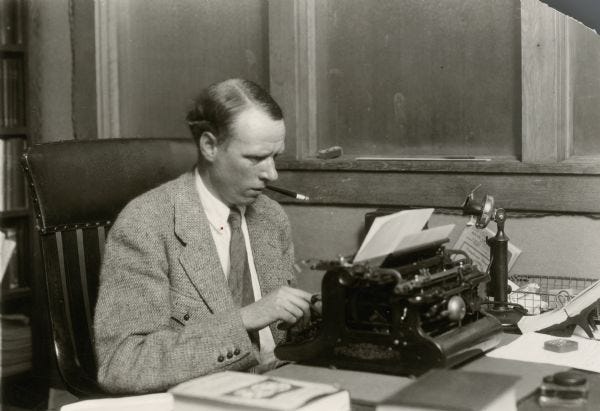
Welcome back to Writing Exercise Thursday! If you’re new here, I sit down to write and I set a timer for half an hour (I allow myself minimal edits afterwards for spelling, grammar, and clarity). I haven’t seen any of these prompts before setting the timer.
Enjoy!
Prompt #1: What do you think is the most important thing for kids to learn in school?
Full transparency: I was homeschooled my entire life so I have no idea how the modern public education system works, other than that I fund it with my tax dollars.
Gosh. I know that America kids are doing pretty horribly at math and English/reading, but I would probably still say American history/civics is the most important thing for them to learn right now. You know those “man on the street interview videos of dumb American kids who can’t answer who our first president was or which side won the Revolutionary War? That should not be a thing in America. There should not be a single American who graduates high school without knowing basic facts about our history and how our government works.
American history is the most important history by far for Americans to know, and it should be the reference point for any other kind of history that’s taught. Civics is even more important. We simply can’t have a functional society if huge swaths of the America people don’t know how the government works or what’s in the Constitution. I would go so far as to say that you shouldn’t be able to vote unless you can prove basic proficiency in history and civics, but that obviously would never happen.
But humor me for a moment. When people come to America and want to become citizens, we make them take a history and civics test. There are 100 questions total, but when the test is administered it only has 10 questions. You only have to get 6 out of 10 questions right in order to pass. I’ve taken the test for fun with friends and family, and we went through all 100 questions. (I got 97 or 98 of them right, for the record. I’m a nerd.)
If you have to know 6 basic facts about America in order to become a citizen, then you should certainly have to know that same number of facts in order to graduate high school, or to be eligible to vote.
Prompt #2: What’s the best gift you’ve ever been given?
So many things come to mind, but none stand out particularly, so I’m just going to list some things that I’m grateful for receiving.
Obviously my life; my liberty and status as an American; my primary education at home and my secondary education at college; my Catholic faith. Thank you, God and my parents!
My beautiful wife and my perfect son.
I really like receiving the same alcohol at Christmas every year (Disaronno Amaretto). The book of writing exercises that I’m taking all these prompts from? That was pretty great. Thanks, wife! This laptop I’m writing on? Thanks Dad!
Prompt #3: Do you have a tattoo? If not, would you ever get one, and what would it be?
I don’t! And I probably won’t ever get one, but I have thought about it and I’m somewhat open to the idea. Matt Walsh has a ginormous chi-rho tattoo on his forearm and I’ve always thought that’s awesome. I love the idea of European pilgrims traveling to the Holy Land and getting the Jerusalem cross tattoo. I would certainly do a religious tattoo like the chi-rho or the Jerusalem cross. Maybe a Sacred Heart. Or maybe a nature symbol like wheat or a bee.
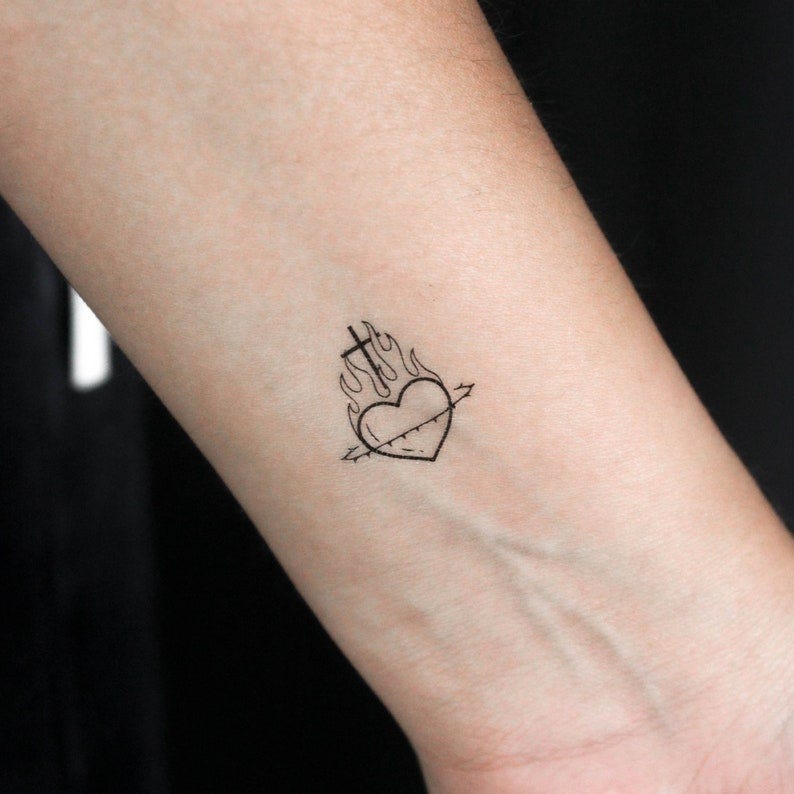
I would want it to be pretty small and simple, and probably in a not-very-obvious spot. My wife and I talked about getting matching tattoos a few years back. We didn’t want to commit to actual tattoos, so we talked about doing the semi-permanent fake tattoos that last only a few years. But we didn’t, for whatever reason. I guess we didn’t want to commit to that either! I’m still more open to that idea. If I do that, I’ll update y’all!
The previous writing exercise post if you wanted to catch up:

One thing I forgot to add is that our current lack of knowledge of American history and civics is completely unprecedented in human history. Illiterate peasant farmers in Athens in 1000 B.C. probably knew more about Athenian history then the average American today.